Commodity Supercycle 2025–2026: Commodity supercycle 2025–2026: The thesis rests on three structural pillars: (1) Decarbonization demand for copper, nickel, cobalt, and lithium (EVs, grids, storage) — projected 10–20 year demand growth. (2) Chronic underinvestment in conventional oil, gas, and mining since 2015–2020 = supply shortage lag. (3) Dollar weakness + inflation regime amplifies commodity returns for EUR investors. Marco's portfolio alignment: BHP (copper + iron ore), Glencore (copper + trading), CMB.Tech (ammonia/green transition), TORM (product tankers benefiting from energy trade flows). Caution: commodity cycles are notoriously hard to time — diversification across sectors is the structural hedge.
Published: February 5, 2026 | Market News
What Is a Supercycle?
Commodity supercycles are extended periods — typically spanning 15-25 years — during which real commodity prices rise structurally above their long-term trend. They are driven by demand shocks that overwhelm the supply response capacity of capital-intensive extractive industries. The mining sector takes 7-15 years to bring a new major copper or lithium mine from discovery to production. Oil and gas exploration has been chronically underfunded since 2014. These long lead times create the conditions for sustained price appreciation when demand growth accelerates.
Tool: Yield on Cost Calculator — calculate your personal YOC based on your original entry price and current annual dividend.
History has witnessed four widely recognized commodity supercycles: the industrialization booms of the 1890s and 1930s, the post-WWII reconstruction era, and most recently, the China-driven supercycle of 2000-2011. Each was catalyzed by a massive, sustained increase in physical commodity demand that existing supply infrastructure could not satisfy. The question for investors today is whether a fifth supercycle is underway — and the evidence is increasingly compelling.
The Bull Case by Commodity
Oil & Natural Gas
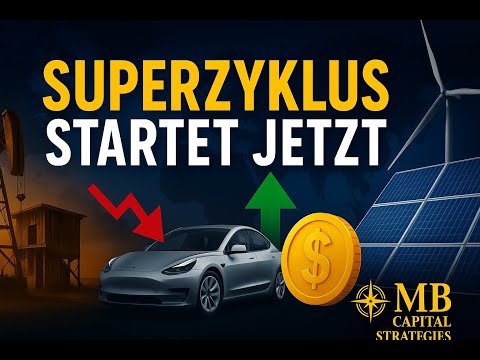
Global oil demand has reached approximately 103 million barrels per day, a new all-time high, driven by developing world consumption growth that has overwhelmed modest declines in OECD demand for transportation fuels. Meanwhile, upstream capital expenditure has never recovered to pre-2014 levels. The major international oil companies have pivoted to capital discipline, returning cash to shareholders rather than investing in new exploration. OPEC+ spare capacity is at historically low levels. The result is a market that is structurally tight, with limited ability to respond to demand surges or supply disruptions.
Natural gas is experiencing its own structural tightening as LNG export capacity expands globally, connecting previously isolated regional gas markets into a single world price. US LNG exports have tripled since 2020, and new liquefaction terminals in the US, Canada, and Qatar will add further demand pull. For producers and midstream operators, the LNG buildout represents a decades-long demand anchor.
Uranium
Uranium may be the single most compelling commodity supercycle story. After a decade of depressed prices following the Fukushima disaster, nuclear power is experiencing a global renaissance driven by energy security concerns, grid reliability requirements, and the recognition that nuclear is the only scalable, zero-carbon baseload power source. Over 60 new reactors are under construction worldwide, and numerous countries — including the US, Japan, South Korea, and several European nations — have reversed anti-nuclear policies.
Meanwhile, uranium supply has been devastated by a decade of underinvestment. Kazakhstan's Kazatomprom and Cameco dominate global production, and secondary supplies (utility inventories, government stockpiles, underfeeding) are largely depleted. The spot price has risen from $20/lb in 2020 to over $80/lb, and long-term contract prices are following. New mine supply takes 10-15 years to develop, creating a sustained deficit that could persist through the 2030s. See the full uranium stocks guide for company analysis and the AI data centre demand angle.
Copper
Copper is the metal of electrification. Electric vehicles require 3-4 times more copper than internal combustion vehicles. Wind turbines, solar installations, grid upgrades, and data centers (for AI) all demand massive copper inputs. Industry estimates suggest copper demand will grow 50-70% by 2035, yet the pipeline of new mine projects is grossly insufficient. Grade decline at existing mines (average copper ore grades have fallen from 1.5% to 0.6% over the past two decades) means more rock must be moved for each pound of copper produced, driving costs higher and limiting production growth.
Lithium
Lithium experienced a boom-bust cycle in 2021-2023, with prices spiking to $80,000/tonne before crashing to $12,000/tonne as Chinese oversupply flooded the market. However, the long-term demand trajectory remains firmly upward as global EV adoption accelerates. Current prices are below the marginal cost of production for many lithium projects, which will discourage new supply investment and set up the next price spike as demand catches up. Patient investors with a 3-5 year horizon may find attractive entry points in quality lithium producers. See the full lithium stocks guide for SQM vs Albemarle vs Pilbara comparison and the hard rock vs brine cost structure.
How to Position
For income investors, the supercycle thesis translates into actionable positions across several sectors. Pipeline and midstream operators (ENB, EPD, OKE) benefit from rising hydrocarbon volumes. Uranium equities (Cameco, Sprott Physical Uranium Trust, NexGen Energy) provide direct exposure. Copper miners (Freeport-McMoRan, BHP, Rio Tinto) offer dividend income plus commodity upside. Diversified royalty companies (Franco-Nevada) provide leverage to multiple commodities with minimal operational risk.
The key insight is that supercycles reward early and patient investors. The best time to build positions is before the consensus recognizes the structural supply deficit — and for several of these commodities, that window is still open.
To understand where we are within the longer price arc, the commodity cycle framework provides a structured view of trough, recovery, peak, and correction phases — and how to read early signals before the crowd moves.
Positioning a Hard Asset Portfolio for a Commodity Supercycle
If the commodity supercycle thesis is correct, the portfolio construction question is: which assets have the most convexity? My framework for positioning:
- Copper miners (highest convexity): Copper has the best long-term supply-demand story (EV transition, grid buildout) with limited new mine supply. Glencore and BHP both have copper growth options — these are the highest-upside supercycle plays.
- Shipping (near-term beneficiary): A commodity supercycle requires massive transport of raw materials from mine to consumer. Tanker, bulk carrier, and LNG shipping capacity is a leveraged play on the volume side of the cycle — independent of commodity prices themselves.
- Gold miners (defensive core): If the supercycle is accompanied by inflation (likely), gold miners benefit from both the underlying gold price and margin expansion as fiat currency depreciates. Barrick and Newmont are natural hedges within the portfolio.
- Pipelines (income floor): Pipeline tariff income is relatively insulated from commodity price swings — volume matters more than price. Enbridge, ONEOK, and Pembina provide the stable base while higher-beta commodity names provide upside.
The supercycle does not require everything to go up at once — different assets lead at different stages. The diversified hard-asset approach participates across phases without requiring precise timing of any individual commodity's peak.
See also: Best Mining Stocks 2026 | Best Tanker Stocks 2026 | Best Energy Dividend Stocks
Disclaimer: This article is for informational and educational purposes only and does not constitute investment advice. The author may hold positions in securities mentioned. Always conduct your own due diligence before making investment decisions.
🇩🇪 Deutsche Version: Diesen Artikel auf Deutsch lesen | 🌐 MB Capital Strategies (DE)
→ Mining Stocks 2026: Commodity Supercycle Beneficiaries Guide
How safe is the dividend? → Dividend Coverage Ratio Explained →