Coterra Energy (CTRA) Analysis 2026: Coterra Energy (CTRA) 2026: Marcellus Shale gas + Permian oil producer — born from Cabot Oil & Gas + Cimarex merger. Fixed + variable dividend model: ~3% fixed, total 4–5% at current prices. Break-even: ~$45 WTI equivalent. The dual commodity exposure (gas + oil) makes Coterra resilient to single-commodity price swings. Marco's thesis: Coterra vs Devon is a gas/oil barbell — high gas prices favor CTRA, high oil prices favor DVN. Holding both provides diversification across US E&P while maintaining a combined 6–8% income yield. The gas-weighted exposure aligns well with LNG demand growth tailwinds.
Verwandte Analyse: Coterra vs Devon Energy vs ConocoPhillips: upstream dividend stock comparison — Upstream Oil & Gas Stocks Hub
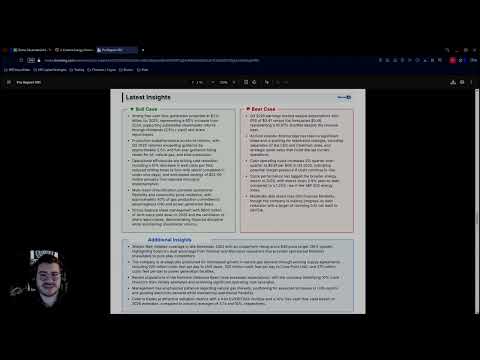
Coterra Energy: Company Profile & Operations Overview
Coterra Energy Inc. (NYSE: CTRA) is a premier US E&P company formed through the 2021 merger of Cabot Oil & Gas and Cimarex Energy. With a market capitalization of approximately $20 billion, Coterra occupies a unique position in the upstream landscape as the only major independent with top-tier assets in both the Marcellus Shale (natural gas) and the Permian Basin (oil), along with a smaller but meaningful position in the Anadarko Basin of Oklahoma. This dual-commodity, dual-basin structure gives Coterra a natural hedge that few E&P companies can replicate.
The Marcellus Shale position in northeastern Pennsylvania represents the legacy Cabot asset base, one of the lowest-cost natural gas operations in North America. The Permian Basin position in the Delaware sub-basin of West Texas represents the legacy Cimarex assets, providing exposure to oil and associated liquids production. Management has demonstrated disciplined capital allocation, flexing investment between the two basins based on relative commodity price signals — an operational agility that is a significant competitive advantage.
Coterra Energy Production Profile: Output, Mix & Growth
Coterra's total production runs approximately 640,000-680,000 boe/d on a six-to-one conversion basis. On an energy-equivalent basis, the production mix is roughly 55% natural gas, 25% oil, and 20% NGLs, reflecting the high-volume Marcellus gas production. However, on a revenue basis, oil and liquids contribute approximately 55-60% of total revenue due to the higher per-unit value of crude oil. The Marcellus operation produces approximately 2.8-3.0 Bcf/d of dry gas, making Coterra one of the five largest natural gas producers in the United States. Permian production from the Delaware Basin runs approximately 90,000-100,000 bbl/d of oil plus associated gas and NGLs.
Coterra's capital allocation flexibility is the key differentiator. In 2023-2024, when Henry Hub gas prices were depressed below $2.50/Mcf, management reduced Marcellus activity and shifted capital to the higher-return Permian program. As gas prices have recovered toward $3.50-4.00/Mcf with new LNG export capacity coming online, Coterra has begun reaccelerating Marcellus investment. This ability to toggle between oil and gas capital programs based on price signals optimizes corporate returns in ways that single-basin operators cannot achieve.
Coterra Energy Break-Even: Oil Price Sensitivity & Cash Costs
Coterra's blended corporate break-even is approximately $40/bbl WTI equivalent when accounting for both oil and gas revenue streams. The Marcellus gas operations carry a cash break-even below $1.50/Mcf — among the lowest in North America — due to the prolific well productivity and minimal water handling costs in dry gas. The Permian operations break even at approximately $42-48/bbl WTI, which is mid-tier for the Delaware Basin. The low-cost Marcellus base effectively subsidizes the overall corporate break-even, providing downside protection that pure oil producers lack. At $75/bbl WTI and $3.50/Mcf Henry Hub, Coterra generates approximately $4.5-5.0 billion in operating cash flow and $2.5-3.0 billion in free cash flow.
Coterra Energy Dividend Model: Yield, Coverage & Sustainability
Coterra employs a base-plus-variable dividend framework, returning a minimum of 50% of free cash flow to shareholders through a combination of base dividends, variable dividends, and share buybacks. The base quarterly dividend of $0.21/share ($0.84 annualized) yields approximately 3.4% and is designed to be sustainable at $45/bbl WTI. Variable dividends and buybacks supplement the base return, with the split between the two determined by management's assessment of relative value. In recent quarters, buybacks have been favored when the stock trades below management's estimate of intrinsic value, while variable dividends are deployed when the stock is more fully valued. Total capital returns have averaged 60-70% of FCF, resulting in a total yield (dividends plus buybacks) of approximately 7-9% at current commodity prices.
Key Risks of Investing in Coterra Energy (CTRA)
- Natural gas price volatility: With 55% of production weighted to gas, Coterra's cash flows are more sensitive to Henry Hub pricing than oil-weighted peers. A sustained period of sub-$2.50/Mcf gas would significantly compress free cash flow despite the low break-even.
- Permian inventory depth: Coterra's Delaware Basin position, while productive, is smaller and potentially shorter-duration than those of larger Permian operators like Diamondback or ConocoPhillips, raising longer-term inventory questions.
- Appalachian basin takeaway constraints: Pipeline capacity out of the Marcellus/Appalachian region remains a periodic bottleneck, creating basis differentials that reduce Coterra's realized gas price relative to Henry Hub.
- LNG demand dependency: The bullish Marcellus thesis depends on continued US LNG export growth. Permitting delays, geopolitical shifts reducing European/Asian gas demand, or competing supply could slow LNG capacity buildouts.
- Merger integration complexity: While the Cabot-Cimarex merger is well-integrated, the dual-basin model requires maintaining two separate operational teams and supply chains, creating higher G&A costs than single-basin operators.
Coterra Energy 2026: Investment Thesis & Verdict
Coterra Energy offers a differentiated value proposition in the US E&P sector: dual-commodity exposure with capital allocation flexibility, best-in-class Marcellus gas economics, and a shareholder return framework that delivers 7-9% total yields at current commodity prices. The stock is particularly attractive for investors who want natural gas exposure without abandoning oil upside, or conversely, who want Permian oil exposure with a natural gas hedge. At 9.2x earnings, Coterra trades at a modest premium to pure-play gas peers but at a discount to Permian oil peers, suggesting the market is not fully crediting the diversification benefit. The structural tailwind of US LNG export growth supports the Marcellus gas thesis over the medium term, while the Permian program provides near-term oil cash flow. Coterra belongs in portfolios as a core mid-cap E&P holding that provides balanced commodity exposure and reliable capital returns.
Related Upstream Analyses
- Equinor Analysis 2026: 8% Dividend & North Sea
- Devon Energy Analysis 2026: Variable Dividend Deep-Dive
- Petrobras Analysis 2026: 12% Dividend + State Risk
- Chevron Analysis 2026: 4% Dividend & Permian Growth
- ConocoPhillips 2026: 17 Years Reserve Life
- Cardinal Energy (CJ.TO): 8% Monthly Dividend — Is It Safe?
- APA Corporation 2026: High Yield E&P Analysis
- Dividend DRIP Calculator: Calculate YOC + Compounding
Understanding FCF for dividends? → Free Cash Flow Explained: Why FCF Is the Only Metric That Matters →
How safe is the dividend? → Dividend Coverage Ratio Explained →