Eni (ENI) Analysis 2026: Eni (ENI) 2026: Italy's integrated energy major with upstream (Africa, Middle East), refining, and a renewable spin-off (Plenitude) in progress. Dividend: ~5% yield, quarterly. The Satellite Model (spinning off Plenitude and Enilive) is designed to unlock hidden value. Marco's take: Eni is interesting but complex — the satellite model may create value but increases tracking difficulty for dividend investors. Key metrics: cash neutrality oil price (~$45 Brent, strong), debt management (Net Debt/EBITDA ~1x, manageable). For income investors: solid 5% yield with upside from satellite exits. Plenitude IPO timeline remains the key catalyst to watch.
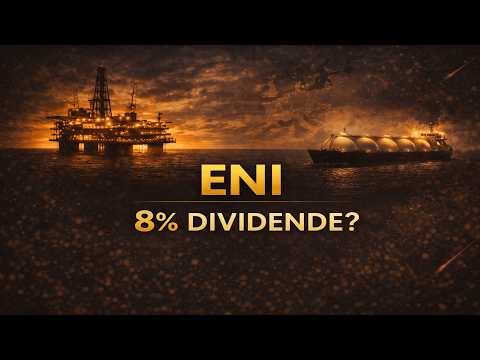
Eni: Company Profile & European Energy Operations
Eni S.p.A. (NYSE: E) is Italy's largest energy company and one of the European supermajors, with a market capitalization of approximately $45 billion. The Italian state holds a combined 30% stake through the Ministry of Economy and Finance and Cassa Depositi e Prestiti, providing sovereign backing. Eni operates across upstream exploration and production, natural gas and LNG marketing, refining and chemicals (through Versalis), and a growing renewables and retail energy business under Plenitude. The company has a storied history of exploration success, particularly in Africa, and has built a reputation as arguably the best explorer among the European majors.
Eni's strategic vision centers on what management calls the "satellite model" — creating standalone business units (Plenitude for renewables/retail, Enilive for biofuels, Versalis for chemicals) that can be partially listed or sold to unlock value and fund the energy transition, while the core upstream and gas/LNG businesses continue generating the cash flows that support dividends and buybacks. This approach distinguishes Eni from peers that are pursuing more integrated transition strategies.
Production Profile
Eni's upstream production stands at approximately 1.65-1.75 million boe/d, with a geographically diverse portfolio spanning Libya, Egypt, Algeria, Nigeria, Angola, Republic of Congo, Mozambique, Indonesia, Iraq, Kazakhstan, Norway, Italy, and the UK. The production mix is approximately 50/50 oil and gas. Africa contributes roughly 60% of total production, reflecting Eni's historical strength in the region. Libya alone accounts for approximately 300,000 boe/d, making it Eni's single largest producing country.
Eni's exploration track record is unrivaled among European majors. The company has consistently achieved the highest reserve replacement ratio and the lowest finding costs in the industry, averaging approximately $2-3/boe over the past decade compared to $5-8/boe for peers. Recent exploration successes include major gas discoveries offshore Egypt (Zohr — the largest Mediterranean gas field), Mozambique (Coral and Rovuma LNG), the Ivory Coast (Baleine — first commercial oil discovery), and Indonesia (Merakes). This exploration machine continuously replenishes the production pipeline at minimal cost, a structural competitive advantage.
Break-Even Analysis
Eni's upstream break-even is approximately $38/bbl Brent, competitive with the best of the European majors. The African production base benefits from large-scale conventional fields with low operating costs, typically $5-8/boe. The Italian and North Sea operations carry higher costs but are offset by advantageous gas pricing in the European market. The Coral FLNG project in Mozambique, which began operations in 2022, delivers contracted LNG at economics equivalent to approximately $25/bbl. At $75/bbl Brent, Eni generates roughly $14-16 billion in operating cash flow and $7-9 billion in free cash flow across its integrated portfolio, providing strong coverage for dividends, buybacks, and growth investments.
Dividend Model
Eni operates a progressive dividend policy supplemented by share buybacks. The 2025 dividend was set at EUR 1.00 per share, with management guiding for annual increases of approximately 3-5%. At current prices, the dividend yield is approximately 7.1% for ADR holders. Eni additionally conducts buyback programs of EUR 1.5-2.0 billion annually, bringing total capital returns to approximately 30-35% of operating cash flow. The company has committed to maintaining the dividend even in adverse commodity environments, with the progressive policy designed to be sustainable at $55-60/bbl Brent. Italian withholding tax on dividends is 26%, but the US-Italy tax treaty reduces this to 15% for eligible US investors, making the after-tax yield competitive with domestic alternatives.
Key Risks of Investing in Eni S.p.A. (NYSE: E)
- African geopolitical concentration: With 60% of production from Africa, Eni is exposed to civil instability (Libya, Nigeria), regulatory shifts, and resource nationalism across multiple jurisdictions simultaneously.
- Mozambique LNG delays: The onshore Rovuma LNG project, originally sanctioned in 2019, has been repeatedly delayed by insurgency in Cabo Delgado. While security has improved, the project timeline and cost remain uncertain, with billions in capital at risk.
- Satellite model execution: The plan to create and partially monetize standalone business units is innovative but untested at this scale. Market conditions for IPOs of Plenitude and Enilive may not materialize as planned.
- Italian political risk: The Italian government periodically imposes windfall taxes and regulatory interventions on energy companies, as demonstrated by the 2022-2023 extraordinary contribution.
- Libyan production volatility: Libyan operations are subject to periodic shutdowns due to political disputes and militia interference, creating unpredictable swings in quarterly production and earnings.
Investment Thesis
Eni is the best explorer among the European majors, and this competitive advantage translates directly into superior long-term reserve replacement, lower finding costs, and a production pipeline that extends visibility well into the next decade. The 7.1% dividend yield is progressive and well-covered, the buyback program adds meaningful capital return, and the satellite model offers potential value catalysts as business units are monetized. At 6.2x earnings and a 10.4% FCF yield, Eni trades at a notable discount to Shell (8x) and TotalEnergies (7.5x), primarily due to the Italian domicile discount and African concentration concerns. However, these risks are well-understood and already reflected in the valuation. For investors seeking a high-yielding European major with genuine exploration-driven growth potential, Eni represents compelling value at current levels.
Related Upstream Analyses
Understanding FCF for dividends? → Free Cash Flow Explained: Why FCF Is the Only Metric That Matters →
Calculate dividend compounding: Dividend DRIP Calculator — compound your cashflow →