Company Overview: More Than Just Sugar
Südzucker AG is Europe's largest sugar producer, but that description barely scratches the surface. The Mannheim-based group operates across five segments: sugar, special products, CropEnergies (bioethanol), starch, and fruit. With EUR 6,355 million in revenue over the first nine months of the fiscal year and an operating result of EUR 95 million, Südzucker is a diversified agri-industrial conglomerate. What makes the stock interesting right now is not the sugar business itself but rather the underappreciated connection between oil prices and Südzucker's earnings power.
The Oil-Ethanol Mechanism
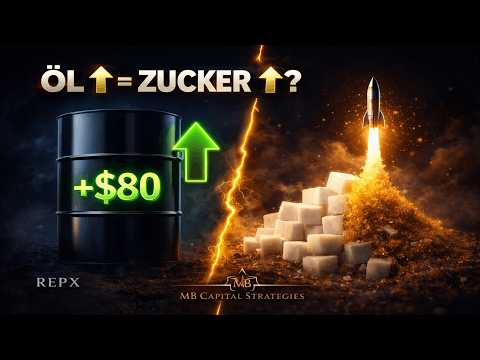
The investment thesis centres on a simple but powerful mechanism that most equity analysts overlook. When oil prices rise — as they did sharply following the Iran conflict — bioethanol becomes increasingly competitive as a blending component and alternative fuel. This directly benefits CropEnergies, Südzucker's bioethanol subsidiary, which operates 4 production sites across Europe and generated EUR 609 million in revenue over nine months. While CropEnergies currently operates near breakeven with an operating result of just EUR 3 million, higher oil prices could significantly expand its margins without requiring additional capital expenditure.
The second channel is less obvious: rising energy and fertiliser costs push up agricultural commodity prices, including sugar beets and raw sugar. This passthrough mechanism typically operates with a lag of 2-4 quarters, meaning the current oil price spike could benefit Südzucker's core sugar segment well into 2027. The stock surged 6.4% to EUR 11.17 in a single session as this dual mechanism began to be priced in.
Valuation: Trading Below Book Value
At EUR 11.17, Südzucker trades at approximately 0.8x book value, a level that suggests the market is pricing in significant downside risk. Barclays disagrees, having recently upgraded the stock to Overweight with a price target of EUR 15, implying roughly 34% upside. The discount appears to reflect investor concerns about the company's warning of potential impairments of up to EUR 550 million, primarily related to goodwill from previous acquisitions. However, impairments are non-cash charges that do not affect the company's operational cash flow generation or its ability to pay dividends.
The group's operating result of EUR 95 million over nine months may seem thin relative to its revenue base, but this reflects the cyclical trough in sugar prices and near-breakeven results at CropEnergies. In a normalised environment with higher sugar prices and oil-driven tailwinds for ethanol, group operating profits could be materially higher. The current valuation essentially gives investors the CropEnergies optionality for free.
CropEnergies: The Hidden Option
CropEnergies deserves particular attention as the swing factor in this thesis. With 4 production sites and EUR 609 million in nine-month revenue, this is not a marginal side project. The subsidiary has the infrastructure to produce significant volumes of bioethanol from renewable raw materials, primarily wheat and sugar beets. At a EUR 3 million operating result, CropEnergies is barely breaking even, but this reflects suppressed ethanol margins in a low-oil-price environment. Every dollar increase in oil prices widens the spread between fossil fuels and bioethanol, flowing almost directly to CropEnergies' bottom line.
The EU's renewable energy directives mandate increasing biofuel blending requirements, providing a structural demand floor for European ethanol production. This regulatory backstop limits CropEnergies' downside while preserving full upside exposure to oil price spikes. For investors, the current near-breakeven results represent the trough, not the norm.
Dividend and Capital Returns
Südzucker's current dividend of EUR 0.20 per share translates to an approximate yield of 1.9% at the EUR 11.17 share price. This is not a high-yield play. The dividend is modest by design, reflecting the cyclical nature of sugar and agricultural commodity earnings and management's prudent capital allocation. The payout provides a baseline return while investors wait for the oil-ethanol thesis to play out. Management has maintained the dividend through various cycles, signalling commitment to shareholder returns even during challenging periods.
Key Risks
- Best Mining Stocks 2026: 8%+ Dividends →
- Impairment risk: Südzucker has warned of potential impairments of up to EUR 550 million. While non-cash, these would reduce book value and could trigger negative sentiment, further pressuring the share price in the short term.
- Sugar price volatility: The core sugar segment remains highly cyclical and subject to EU and global sugar market dynamics, weather conditions, and regulatory changes to sugar production quotas.
- Ethanol margin uncertainty: CropEnergies' profitability is directly tied to the spread between ethanol and fossil fuel prices. A decline in oil prices would compress margins and undermine a central pillar of this thesis.
- EU regulatory risk: Changes to biofuel blending mandates, carbon pricing mechanisms, or agricultural subsidies could materially affect both the sugar and ethanol businesses.
- Thin operating margins: An operating result of EUR 95 million on EUR 6,355 million revenue (1.5% margin) leaves very little room for error. Cost increases or revenue shortfalls could quickly push the group toward losses.
Investment Thesis
Südzucker is a contrarian play on the intersection of energy prices and European agriculture. At 0.8x book value, investors are getting Europe's largest sugar producer at a significant discount while receiving free optionality on CropEnergies' ethanol business. The oil-ethanol link is the key mechanism: as geopolitical tensions drive energy prices higher, both the ethanol subsidiary and the core sugar business stand to benefit. Barclays' EUR 15 target reflects this normalisation potential. The risks are real — thin margins, impairment overhangs, and commodity cyclicality demand a measured position size (maximum 2-3% of portfolio). But for investors who understand agricultural commodity cycles and want indirect oil exposure through a non-obvious vehicle, Südzucker offers an asymmetric risk-reward profile at current levels.