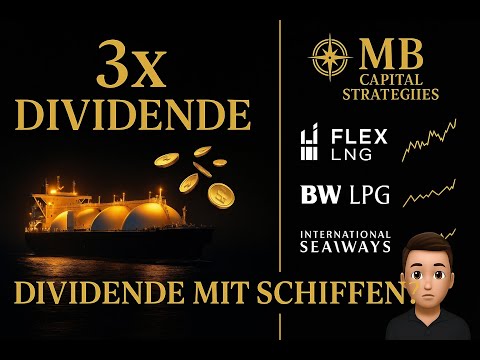
Why Gas Shipping Stands Apart
Gas shipping occupies a unique position in the maritime sector. Unlike crude and product tankers that trade predominantly in the volatile spot market, LNG carriers and large gas carriers (VLGCs) benefit from a structural shift toward long-term contracts driven by the global energy transition. The buildout of LNG liquefaction capacity in the US, Qatar, and Mozambique requires dedicated shipping capacity secured years in advance. For income investors, this contract visibility translates into more predictable cashflows and dividends compared to the boom-bust cycles of crude tanker markets.
Flex LNG (FLNG) — Contracted LNG Carrier Yield
Flex LNG operates a fleet of 13 modern LNG carriers, all built between 2018 and 2021 with state-of-the-art MEGI or X-DF propulsion systems that deliver best-in-class fuel efficiency and boil-off rates below 0.08% per day. The fleet is employed on a mix of long-term time charters and shorter-duration contracts, with a weighted average remaining charter duration of approximately 4-5 years. This backlog provides revenue visibility that is rare in the shipping sector.
Flex LNG pays a quarterly dividend of $0.75 per share, representing an annualized yield of approximately 10% at current prices. The dividend is well-covered by contracted cashflows: the company generates EBITDA of roughly $300 million annually against a fleet of 13 vessels, with operating leverage to any upside in re-chartering rates when current contracts expire. The key risk is the LNG charter market softening as a wave of newbuilding deliveries arrives in 2025-2027, though Flex's modern fleet and existing contracts provide a meaningful buffer.
BW LPG (BWLPG) — The VLGC Market Leader
BW LPG is the world's largest owner and operator of very large gas carriers, with a fleet of approximately 45 VLGCs following the merger with Avance Gas. VLGCs transport liquefied petroleum gas — primarily propane and butane — from US export terminals and Middle Eastern producers to petrochemical complexes and heating markets across Asia. The US-to-Asia VLGC trade route, typically via the Panama Canal or Cape of Good Hope, is the backbone of this market.
Glossary: Baltic Dry Index explained — the key shipping demand indicator and what BDI movements mean for dry bulk and tanker stock valuations.
BW LPG's scale advantage is significant: the company's commercial pool of over 40 vessels provides cargo optionality, route flexibility, and scheduling efficiency that smaller operators cannot replicate. VLGC spot rates have averaged $45,000-60,000 per day, well above fleet breakeven costs of $20,000-25,000 per day. BW LPG distributes substantially all net profit through quarterly dividends, with trailing yields exceeding 13%. The company's balance sheet is conservative, with net debt-to-fleet-value below 30%, providing resilience through market downturns.
International Seaways (INSW) — Diversified Crude and Product Platform
International Seaways brings a different angle to the gas-adjacent shipping thesis. While primarily a crude and product tanker operator with VLCCs, Suezmaxes, Aframaxes, and MR tankers, INSW provides diversified exposure to global oil transportation with a fleet of approximately 80 vessels. The company's inclusion in this analysis reflects its role as a bridge between pure-play gas carriers and the broader tanker market.
INSW operates a variable dividend policy distributing 50% of net income, supplemented by share buybacks. At current tanker rates, the combined yield from dividends and buyback accretion approaches 9-11%. The company's fleet is among the youngest in the crude tanker peer group, with significant exposure to the Suezmax segment where supply-demand fundamentals are particularly tight. INSW's investment-grade-adjacent balance sheet and diversified fleet composition make it a core holding for investors seeking broad tanker market exposure with lower single-segment concentration risk.
Building a Gas Shipping Income Sleeve
Combining Flex LNG, BW LPG, and International Seaways creates a diversified gas and oil transportation income portfolio. Flex LNG provides contracted LNG carrier exposure with predictable cashflows. BW LPG delivers the highest current yield through VLGC spot market strength and scale advantages. INSW adds crude tanker diversification and capital return discipline. Together, these three positions offer a blended yield of approximately 10-11% with exposure to the structural growth in global gas trade, the energy transition's demand for LNG shipping, and the continued tightness in tanker supply across all segments.
Top 10 LNG Tanker Companies: Full Market Overview 2026
The global LNG shipping fleet is concentrated among a dozen publicly-listed operators. Here are the top 10 LNG tanker companies ranked by fleet size, contract coverage, and investability for dividend-focused investors in 2026:
Ranked #1–3 above: Flex LNG (FLNG), BW LPG/GasLog (BWLPG), and International Seaways (INSW) represent the core investable LNG shipping positions — full analysis above.
#4–10: Additional LNG tanker operators worth watching:
- Golar LNG (GLNG) — Pioneer of FLNG (Floating LNG) technology. Golar operates FLNG vessels that allow offshore gas processing directly at the wellhead, reducing pipeline infrastructure needs. A higher-risk, higher-upside play on LNG infrastructure.
- New Fortress Energy (NFE) — Integrated LNG company combining terminal infrastructure with shipping. Focused on emerging markets energy access. More volatile than pure shipping plays but unique exposure to LNG-as-a-service model.
- Höegh LNG (HLNG) — Specializes in FSRUs (Floating Storage and Regasification Units). As European countries rushed to diversify away from Russian pipeline gas, FSRU demand surged — Höegh was a direct beneficiary. Long-term contracted revenues provide stability.
- Excelerate Energy (EE) — US-listed FSRU operator with long-term contracted fleet. Provides stable, bond-like cash flows from fixed-rate FSRU leases, appealing to conservative income investors seeking gas infrastructure exposure.
- Awilco LNG — Small Norwegian LNG carrier operator. High operational leverage to spot LNG rates, suitable for tactical positions during rate spikes.
The distinguishing factor between these companies and the core three picks is contract coverage vs. spot exposure. FLEX LNG's ~100% contracted revenues provide Utility-like predictability. Golar and New Fortress carry more execution and development risk in exchange for higher upside potential.
LNG Tanker Market Outlook 2026: Supply and Demand Dynamics
The LNG shipping market in 2026 faces a nuanced supply picture. The orderbook is significant — over 250 LNG carriers on order — but delivery schedules are stretched across 2024-2028. The Panama Canal capacity constraints that plagued 2023-2024 have eased somewhat, but seasonal disruptions remain a wildcard. On the demand side, European gas security investments continue to drive FSRU demand, while Asian LNG imports from Japan, South Korea, and increasingly India provide baseline cargo demand.
Key rate driver for 2026: US LNG export capacity expansion. New US export terminals (Plaquemines, Port Arthur, Corpus Christi expansions) coming online add structural long-haul cargo volume on the US-Europe and US-Asia routes — the most favorable routes for FLEX LNG's long-haul carriers. This structural demand growth underpins the contracted rate environment that makes FLEX LNG's dividend profile particularly attractive versus spot-exposed peers.
Related LNG & Shipping Analyses
- Shipping Triple Payday June 11: TORM + FLEX LNG + BW LPG Dividends →
- FLEX LNG Q1 2026: 20th Consecutive Dividend — Analysis →
- Höegh Autoliners (HAUTO) 2026: 15% Dividend, RoRo Shipping Analysis →
- Baltic Dry Index 2026 Outlook
- Green Shipping 2026
- Frontline vs Scorpio
- Tanker Charter Rates
- Hidden Champions
- Best LNG Stocks 2026 — Full Ranking
- Best Tanker Stocks 2026
- VLCC Explained — Crude Tanker Rates