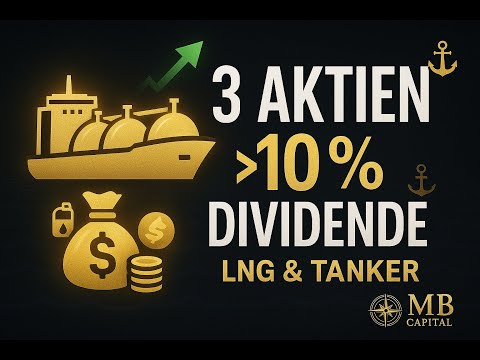
The Shipping Dividend Thesis
Shipping companies operate in one of the most capital-intensive industries on earth, yet the best operators have discovered a formula that income investors love: minimal reinvestment capex during tight-supply periods combined with aggressive variable dividend policies that distribute 75-100% of net income directly to shareholders. Unlike traditional dividend aristocrats that grow payouts at 3-5% annually, these shipping names can yield 10-20% in a single strong year — then reset lower when cycles turn. The key is timing your entry and understanding when the dividend is sustainable versus when it is a cycle-peak mirage.
Dorian LPG (LPG) — The VLGC Dividend Machine
Dorian LPG operates a fleet of 25 very large gas carriers (VLGCs), each capable of transporting 84,000 cubic meters of liquefied petroleum gas. VLGCs are the workhorses of the global LPG trade, carrying propane and butane from US Gulf Coast export terminals to end-users in Asia. The company has adopted a policy of returning substantially all free cashflow to shareholders through a combination of regular and special dividends plus share buybacks. With VLGC spot rates averaging $45,000-55,000 per day and fleet-wide breakeven costs around $22,000 per day including debt service, Dorian generates approximately $20-30 million per quarter in distributable cashflow. The fleet's average age of roughly nine years positions it well for CII compliance without expensive retrofits. At recent share prices, the trailing twelve-month dividend yield exceeds 12%.
Index: The Baltic Dry Index (BDI) tracks global bulk shipping demand — a key leading indicator for commodity cycles and shipping stocks.
Related: Learn about Bulk Carrier Stocks — how Capesize, Panamax and Supramax vessels differ and why size matters for dividends.
Torm (TRMD) — Product Tanker Purity
Torm operates one of the largest fleets of product tankers globally, with approximately 90 vessels spanning LR2, LR1, and MR segments. Product tankers carry refined petroleum products — gasoline, diesel, jet fuel, and naphtha — and benefit from refinery dislocation trades that crude tankers cannot capture. Torm's dividend policy targets distributing the majority of net income on a quarterly basis. What distinguishes Torm is fleet quality: the company has invested heavily in ECO-design newbuildings and maintains an average fleet age under eight years. In a strong product tanker market with LR2 TCE rates of $40,000-50,000 per day and MR rates of $25,000-35,000 per day, Torm's quarterly dividend has reached $1.50-2.50 per share, translating to an annualized yield above 14%. The company's balance sheet leverage is moderate, with net loan-to-value around 25%, providing a cushion for dividend sustainability even if rates soften.
Frontline (FRO) — The Crude Tanker Bellwether
Frontline is the most recognized name in crude oil transportation, operating a fleet of VLCCs, Suezmaxes, and Aframaxes. Under John Fredriksen's strategic direction, Frontline completed a major fleet renewal through the 2021 Euronav acquisition and subsequent vessel sales, leaving the company with one of the youngest VLCC fleets in the industry. Frontline's variable dividend policy distributes 80% of adjusted net income quarterly. At VLCC spot rates of $45,000-60,000 per day — driven by OPEC+ production decisions, ton-mile demand growth, and limited newbuilding deliveries — Frontline generates $0.50-0.80 per share in quarterly dividends. The annualized yield at recent prices hovers around 11%. The risk factor is crude tanker rate volatility: VLCC rates can swing from $20,000 to $100,000 per day within a single quarter, making Frontline's dividend stream inherently lumpy.
How to Play These Yields
The optimal approach for income investors is to treat these shipping dividends as cyclical income harvests rather than permanent yield. Enter positions when the orderbook-to-fleet ratio is below 10% and fleet age demographics favor continued scrapping. Collect dividends aggressively during the upcycle. Trim positions when newbuilding orders surge or forward rate curves flatten. At current orderbook levels — roughly 5-8% across tanker sub-segments — the supply setup remains favorable for sustained high payouts through 2026 and likely into 2027.
Understanding Variable vs. Fixed Shipping Dividends
One of the most important distinctions for income investors approaching shipping stocks is the difference between variable and fixed dividend policies. Most shipping companies — including Dorian LPG, Torm, and Frontline — use variable payout policies. This is fundamentally different from a Realty Income or a Johnson and Johnson paying a consistent, slowly growing dividend each quarter.
Variable shipping dividends work like this: the company earns charter income based on spot or short-term contract rates. After subtracting operating costs, G&A, debt service, and maintenance capex, the remaining free cash flow is distributed to shareholders as a dividend. In a strong market, this produces extraordinary yields. In a weak market, the dividend can drop by 60-80% or disappear entirely.
The Supply Side Story — Why Shipping Dividends Could Stay Elevated
The sustainability of high shipping dividends depends primarily on one factor: fleet supply relative to cargo demand. The good news for current investors is that the supply picture looks constrained through at least 2027 for most tanker segments:
- Orderbook-to-fleet ratio: Tanker newbuilding orders represent roughly 5-8% of the existing fleet — below the historical average of 12-15%. Shipyards are fully booked through 2027-2028, primarily with LNG carrier orders. New tanker berths are limited.
- Scrapping pressure: A significant portion of the existing tanker fleet is over 20 years old. Age-related regulatory requirements (CII efficiency ratings, ballast water treatment) are accelerating the economics of scrapping older vessels, removing supply.
- Ton-mile expansion: The reshuffling of energy trade flows following the Russia-Ukraine conflict added structural ton-mile demand as crude and refined products travel longer distances to reach their end-markets. This effect is partially structural, not purely cyclical.
Risk Management: Position Sizing for High-Yield Shipping Stocks
Given the cyclical and variable nature of shipping dividends, position sizing matters more than with traditional dividend stocks. A framework that works for Marco's portfolio approach:
- Maximum sector allocation: Shipping as a sector should not exceed 20-25% of total portfolio value for most investors. The volatility is too high for larger concentrations unless you are deeply specialized.
- Diversify within shipping: Different shipping sub-sectors have different cycle dynamics. Product tankers (TORM), crude tankers (Frontline), LPG carriers (Dorian LPG), and LNG carriers (FLEX LNG) do not always move together. A diversified position across sub-sectors smooths the income stream.
- Watch the orderbook quarterly: If newbuilding orders surge above 15% of fleet in any sub-sector, that is a yellow flag for future rate pressure. This is a publicly available data point from Clarksons Research or VesselsValue.
- Dividend-focused entry points: The best entry timing for shipping stocks is typically when rates are recovering from a trough — not when they are at peak. Buying on the way down catches the full upside of the next cycle.
Tax Considerations for US and European Investors
Shipping dividends often come with specific tax implications that investors should understand before building large positions:
- US investors — shipping companies: Many shipping companies are incorporated in Bermuda, Greece, or Cyprus. Their dividends typically do not qualify for the lower US qualified dividend tax rate (15-20%) and are taxed as ordinary income. Dorian LPG, as a US-domiciled company, is the exception — its dividends may qualify in certain tax circumstances. Consult a tax professional.
- Norwegian shipping companies: Frontline is listed on the Oslo Stock Exchange and NYSE. For European investors, Norwegian withholding tax (15%) applies to dividends. Tax treaty provisions may allow partial or full recovery.
- Torm (Denmark): TRMD pays dividends with Danish withholding tax deducted at source (27%). Treaty provisions typically allow EU/US residents to recover the excess above 15%.
- Holding structures: Some investors access shipping via Exchange-Traded Funds (ETFs) like the US Global Sea to Sky Cargo ETF or similar vehicles, which handle the tax complexity at the fund level.
Related Shipping Analyses
- Baltic Dry Index 2026 Outlook
- Green Shipping 2026
- Frontline vs Scorpio
- Tanker Charter Rates
- Hidden Champions
- TORM (TRMD) Dividend Analysis 2026 — $0.70 June 11, Q1 TCE $34k/Day
- Shipping Dividend Double Payday June 2026 — TORM + FLEX LNG + CMB.Tech
- Debitum Review 2026: 11% XIRR — Fixed Income Alternative to Shipping Volatility
- CMB.Tech (CMBT) $0.64 Ex-Dividend June 2026 — Largest Position Analysis