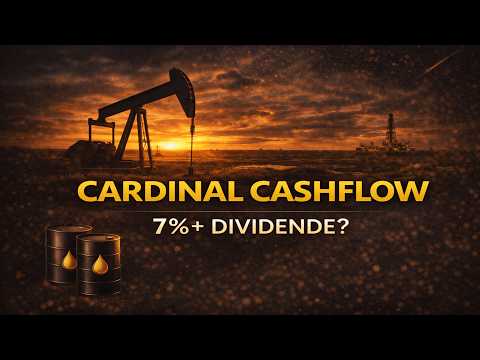
Company Overview
Cardinal Energy Ltd (TSX: CJ) is a small-cap Canadian light oil producer with a market capitalization of approximately C$1.1 billion. The company operates primarily in Alberta, focusing on light oil and natural gas production from conventional and tight oil reservoirs in the Midale, Mitsue, and Wainwright areas. Cardinal was established in 2010 and has grown through a combination of organic development and targeted acquisitions of mature, low-decline conventional assets — a strategy that prioritizes cash flow stability and sustainability over production growth.
Cardinal occupies an increasingly rare niche in the Canadian E&P landscape: a pure-play conventional light oil producer at a time when most Canadian upstream capital is directed toward oil sands, Montney gas, or Duvernay tight oil. The company's conventional assets carry inherently lower decline rates than unconventional shale plays, typically 15-20% annually versus 50-70% for horizontal shale wells. This means Cardinal requires significantly less maintenance capital to sustain production, leaving a larger proportion of cash flow available for dividends and debt reduction.
Production Profile
Cardinal produces approximately 21,000-23,000 boe/d, with the production mix weighted approximately 70% light and medium oil, 15% NGLs, and 15% natural gas. The light oil weighting is favorable for realizing prices close to WCS (Western Canadian Select) and WTI benchmarks without the deep discounts that heavy oil producers face. The Midale property in southeastern Saskatchewan is the largest single asset, producing approximately 7,000 boe/d from Mississippian carbonate reservoirs through a combination of waterflood and EOR (enhanced oil recovery) operations. The Wainwright and Mitsue assets in central Alberta contribute the balance.
Cardinal has guided for approximately flat production through 2027, with sustaining capital of C$140-160 million annually sufficient to offset natural declines. The low decline rate means the company can maintain production with a modest drilling program of 30-40 wells per year, and any upside from additional drilling directly adds to free cash flow available for distributions.
Break-Even Analysis
Cardinal's corporate break-even price is approximately C$48/bbl WTI (roughly US$35/bbl), reflecting the low operating costs of its conventional asset base. Field operating costs run approximately C$16-18/boe, which is competitive for conventional production in Alberta. Transportation costs are modest given the proximity to existing pipeline infrastructure, and royalty rates average approximately 15-18% of revenue. At US$75/bbl WTI and current exchange rates, Cardinal generates approximately C$220-260 million in annual free cash flow, representing an FCF yield of roughly 13.2% on the current market cap. The break-even provides comfortable coverage of the base dividend down to approximately US$50/bbl WTI, offering meaningful downside protection.
Dividend Model
Cardinal pays a monthly dividend of C$0.06 per share (C$0.72 annualized), yielding approximately 8.4% at current prices. The monthly payment schedule is particularly attractive for income investors seeking regular cash flow. Cardinal has increased the dividend multiple times since reinstating it in 2021, demonstrating management's commitment to returning cash to shareholders. The payout ratio at current commodity prices is approximately 55-65% of free cash flow, which provides a healthy coverage cushion. Management has indicated that dividend sustainability is the top priority and that the payout is designed to be maintained through a range of commodity prices, including moderate downturns. For US investors, Canadian dividends are subject to a 15% withholding tax under the US-Canada tax treaty, which is fully creditable against US tax liability in most cases.
Key Risks
- Small-cap liquidity: Cardinal's market cap of C$1.1 billion and average daily trading volume create liquidity constraints. Large positions may be difficult to enter or exit without moving the stock price, and the bid-ask spread can be wider than for larger-cap E&P companies.
- WCS/WTI differential volatility: Cardinal's realized prices are influenced by the Western Canadian Select discount to WTI, which can widen significantly during periods of pipeline congestion or refinery outages, compressing margins.
- Conventional asset maturity: While low-decline assets are advantageous for cash flow stability, they also represent mature fields with limited growth upside. As reservoirs deplete, enhanced recovery techniques become necessary, potentially increasing per-barrel costs over time.
- Canadian regulatory burden: Federal and provincial carbon taxes, methane regulations, and potential production caps add operating costs and regulatory complexity for Canadian upstream producers.
- Single-country concentration: All of Cardinal's assets are in Alberta and Saskatchewan, providing no geographic diversification against Canadian-specific risks such as transportation bottlenecks, regulatory changes, or currency devaluation.
Investment Thesis
Cardinal Energy is a high-yield small-cap opportunity for income investors who understand Canadian upstream economics. The 8.4% dividend yield, paid monthly, is supported by low-decline conventional assets with a break-even that provides sustainability through moderate commodity downturns. The stock trades at just 5.5x earnings and a 13.2% FCF yield, suggesting the market is applying a significant small-cap and Canada discount that may be excessive. The conventional asset profile is inherently less volatile than unconventional shale, providing steadier production and more predictable cash flows. For US investors comfortable with Canadian withholding tax mechanics and OTC/TSX execution, Cardinal offers one of the highest sustainable yields in the North American E&P sector. This is a position best suited for the "income sleeve" of a diversified energy portfolio, with position sizing appropriate for a small-cap security.
- Withholding Tax Guide: Canada & Australia
- Coterra vs Devon: Gas vs Oil Showdown
- APA Corporation Analysis 2026
- The Commodity Supercycle Thesis
- Upstream Oil & Gas: E&P Dividends & Cycle Timing
- PetroTal 2026: 70% Below NAV
- Pembina Pipeline 2026: 5.5% Dividend + Midstream
- Dividend DRIP Calculator: Calculate Your YOC
→ Oil & Gas Stocks 2026: Best Upstream Dividend Picks Ranked
Understanding FCF for dividends? → Free Cash Flow Explained: Why FCF Is the Only Metric That Matters →
How safe is the dividend? → Dividend Coverage Ratio Explained →