Debitum Investments 2026 — Reality Check: Debitum Investments 2026: EU-regulated P2P lending platform (ECSP licensed, Latvia) offering 10–12% yields on SME loans with buyback guarantees. Marco's reality check: Debitum is a legitimate higher-yield allocation (max 5% of portfolio) but fundamentally different from dividend stocks — liquidity is limited, default risk is real in downturns, and the 10% yield reflects actual SME credit risk. No deposit protection. Liquidity: secondary market exists but is not guaranteed. Affiliate disclosure: Marco holds a referral partnership. For experienced yield investors: Debitum sits between high-yield bonds (liquid) and direct lending (illiquid) — a valid niche with more protection than typical P2P.
Verwandte Analyse: High-Yield Dividend Stocks 2026 — P2P, REITs, BDCs compared
Published: January 28, 2026 | Platform Review
Debitum Investments Review — Quick Answer
Is Debitum Investments legit? Yes. Debitum holds a MiFID II Investment Brokerage Firm license issued by Latvia's FCMC (now supervised by the Bank of Latvia), making it one of the few P2P platforms in Europe with formal regulatory oversight. Investor funds are held in segregated accounts.
What return can you realistically expect? Based on actual portfolio data from 2024–2026, investors achieve approximately 9–11% XIRR in EUR. The marketed headline rate (up to 16%) reflects the best-available loans, not average real returns.
Is it worth the risk? For most dividend investors, no — not as a core holding. The 86% loan-book concentration in one originator (LFDF) means the buyback guarantee provides less protection than it appears. As a 2–5% satellite position for investors who understand originator risk, it is a reasonable niche tool.
What Is Debitum Investments?
Debitum Investments is a Latvia-based peer-to-peer (P2P) lending platform that connects investors with business loans originated by third-party lending companies across Europe. The platform focuses on short-term business loans — invoice financing, supply chain finance, and working capital facilities — with typical loan durations of 1-12 months and advertised returns of 8-12% annually. For income investors accustomed to the regulated, transparent world of publicly traded BDCs and dividend stocks, P2P lending represents a fundamentally different asset class with its own set of opportunities and risks.
Key Metric: Understanding Free Cash Flow is essential for dividend safety analysis — it shows what's actually available to pay shareholders.
Debitum obtained its Investment Brokerage Firm license from the Latvian Financial and Capital Market Commission (FCMC) in 2021, becoming one of the few European P2P platforms to operate under formal MiFID II regulation. Since the FCMC merged into the Bank of Latvia in 2023, the platform is now supervised by the Bank of Latvia. This regulatory status provides meaningful investor protections including segregated accounts, compliance requirements, and regulatory oversight — distinguishing Debitum from the many unregulated P2P platforms that have failed or frozen investor funds over the years.
Try Debitum Investments Yourself
Historical returns: 9-11% p.a. on European P2P business loans (not guaranteed; past performance is not indicative of future results). Minimum entry from €10.
Sign Up at Debitum Investments →* Affiliate link — we may earn a commission at no extra cost to you.
How Does Debitum Work? Step by Step
1. Registration & Verification: Sign up, complete KYC (identity verification), and deposit funds in euros via bank transfer or payment provider. The onboarding process is straightforward and typically completed within 1-2 business days.
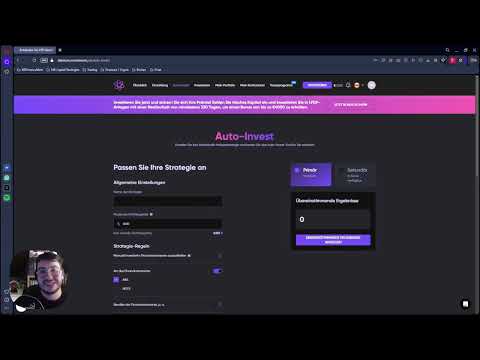
2. Browse or Auto-Invest: You can manually select individual loans from the marketplace — filtering by loan originator, interest rate, duration, and loan type — or set up the Auto Invest feature to automatically allocate your capital based on your criteria. Auto Invest is particularly useful for maintaining consistent deployment of capital.
3. Earn Interest: Interest accrues monthly on your invested principal. Most loans on Debitum feature a buyback guarantee from the loan originator, meaning if the loan is more than 90 days overdue, the originator must repurchase it at face value plus accrued interest (plus a penalty on delayed repayments).
4. Reinvest or Withdraw: As loans repay, you can reinvest the principal and interest into new loans or withdraw to your bank account. Withdrawals are processed within 1-3 business days.
Performance Reality
Actual Returns and Portfolio Quality in 2026
Let me be direct with the numbers, because the marketing headline and the real return are two different things.
- Stated interest rates: 8% to 16% per year, depending on the loan originator.
- Reported XIRR (real internal rate of return): approximately 11.44% — the platform's historical average since inception (independent P2P review data, May 2026).
- Realistic investor return: roughly 9–12% per year after reinvestment gaps and minor delays.
The gap between the stated rate (up to 16%) and the actual XIRR (~11.4%) is normal for P2P platforms — it reflects periods where capital sits uninvested waiting for new loans, plus minor delays. An 11% real return is respectable by European P2P standards, but it is not the 16% marketing headline.
- 97.3% of the portfolio is performing as expected (May 2026).
- 2.7% is in recovery — not in default. Recovery here means the buyback obligation is being processed.
- Zero defaults on the five-year track record (confirmed by multiple independent review sources).
The Concentration Problem You Need to Understand
This is not an automatic reason to avoid Debitum — but it is something every investor must understand before putting money in. A buyback guarantee from an originator that makes up 86% of the book offers far less diversification than the “buyback” label suggests. Independent investigative reporting in 2026 has also flagged how closely tied the dominant originator network is to the platform's own ownership — another reason to size any position conservatively.
The Good
Regulatory status matters. In the P2P lending world, where platform failures and fraud have wiped out billions in investor capital (Mintos suspensions, Grupeer collapse, Kuetzal scam), Debitum's FCMC license is a genuine differentiator. The platform is required to maintain minimum capital requirements, undergo regular audits, and keep investor funds in segregated accounts.
Short loan durations reduce risk. Unlike consumer lending platforms where loans can run 3-5 years, Debitum's business loans typically mature in 1-6 months. This means your capital is not locked up for extended periods, and the short duration limits credit risk exposure. If economic conditions deteriorate, you can simply stop reinvesting as loans repay, naturally reducing your exposure.
Realized returns have been reasonable. Investors who have been active on the platform for multiple years report net returns (after defaults and late payments) in the 9-11% range, which is broadly consistent with the advertised rates. This is a meaningful premium over government bonds and investment-grade corporate debt, though it comes with significantly higher risk.
Buyback guarantee adds a safety layer. All loans on Debitum carry a buyback obligation from the loan originator. If a loan is more than 90 days overdue, the originator must repurchase it at par value plus accrued interest. While this does not eliminate risk (if the originator itself defaults, the guarantee is worthless), it provides meaningful protection against individual borrower defaults and has historically resulted in very low realized loss rates for investors.
Auto Invest simplifies portfolio management. The platform's Auto Invest feature allows you to set criteria (minimum interest rate, maximum duration, preferred originators) and automatically deploy capital as matching loans become available. This passive approach is ideal for investors who want consistent exposure without daily monitoring.
Debitum vs. Other P2P Platforms
| Feature | Debitum | Mintos | PeerBerry |
|---|---|---|---|
| Regulation | FCMC Licensed | FCMC Licensed | Unregulated |
| Loan Type | Business Loans | Mixed (Consumer + Business) | Consumer + Business |
| Avg. Returns | 9-11% | 8-12% | 9-11% |
| Buyback Guarantee | Yes (most loans) | Partial | Yes |
| Min. Investment | €10 | €50 | €10 |
| Secondary Market | Yes | Yes | No |
Debitum stands out for its exclusive focus on business loans and its regulated status. While Mintos offers a larger marketplace with more loan originators, it has also experienced more originator defaults and suspensions. PeerBerry offers solid returns but lacks both regulation and a secondary market, reducing investor flexibility.
The Concerns
Loan originator risk is the elephant in the room. Debitum is a marketplace, not a direct lender. The actual loans are originated by third-party lending companies (loan originators) who assume the credit risk assessment and collection responsibilities. If a loan originator fails — due to fraud, mismanagement, or a deteriorating loan book — investors can lose their principal regardless of the underlying borrower performance. Debitum has experienced loan originator issues in the past, including suspended originators and recovery processes that can take months or years.
Currency risk for US investors. All loans on Debitum are denominated in euros. US investors face EUR/USD exchange rate risk that can meaningfully impact returns. A 10% return in euros translates to 5% in dollars if the euro depreciates 5% against the dollar during the holding period. There is no built-in hedging mechanism.
Liquidity is limited. While Debitum offers a secondary market where investors can sell loan positions before maturity, liquidity is not guaranteed. In times of stress — precisely when you most want to exit — secondary market demand may evaporate, leaving you unable to sell at reasonable prices.
Tax complexity for US persons. Interest income from a Latvian platform creates foreign tax reporting obligations. US investors must report the income on their federal tax returns, and depending on the amounts, may need to file FBAR and FATCA reports. The tax treatment is less favorable than qualified dividends from publicly traded equities.
Verdict: A Small Allocation at Best
Debitum Investments is one of the better-regulated European P2P platforms, and its short-duration business loan model is structurally sounder than consumer lending platforms with multi-year loans. However, for US investors, the combination of currency risk, loan originator risk, limited liquidity, tax complexity, and the availability of comparable yields from publicly traded BDCs (which are regulated, liquid, diversified, and denominated in USD) makes Debitum a hard sell as a core portfolio allocation.
If you are intrigued by the P2P lending concept, a 2-5% allocation as an alternative income experiment is reasonable — but only with money you can afford to lose and with full awareness that this is not equivalent to buying shares of Ares Capital or Blue Owl. The risk premium for the illiquidity, currency exposure, and platform risk should be substantial, and at current rates, it may not be. For investors looking for physical-asset-backed yield alternatives — ships, mines, pipelines — our hard assets investing guide compares sectors and yields in one framework.
Who Is Debitum Best For?
- European investors who want regulated P2P exposure without currency risk
- Income-focused investors looking for 9-11% yields outside of public markets
- Diversification seekers who want uncorrelated returns to stocks and bonds
- Hands-off investors who can use Auto Invest for passive deployment
- Small-capital investors — with a €10 minimum, you can start building a diversified P2P portfolio immediately
Calculate your passive income:
- Yield on Cost Calculator — model how a 10% P2P yield compounds over time
- DRIP Calculator — reinvest P2P interest like a dividend reinvestment plan
- Financial Freedom Calculator — how much passive income to reach FIRE
Model Your Passive Income:
- YOC Calculator — compound a 10% P2P yield over 5-10 years
- DRIP Calculator — reinvest P2P interest automatically
- FIRE Calculator — how much passive income to reach financial freedom
Ready to Start Earning Passive Income?
Open your Debitum Investments account today and start earning up to 11% annually on regulated European business loans.
Open Free Account at Debitum →* Affiliate link — we may earn a commission at no extra cost to you.
Frequently Asked Questions
Is Debitum Investments safe?
Debitum is one of the few P2P platforms licensed under MiFID II and supervised by the Bank of Latvia (formerly FCMC). Investor funds are held in segregated accounts, and the platform undergoes regular audits. However, P2P lending always carries risk — including the possibility of loan originator default. In 2026 the biggest single risk is concentration: roughly 86% of the loan book sits with one originator (LFDF), so size any position accordingly.
What is the minimum investment?
You can start investing with as little as €10 per loan, making it easy to diversify across many loans even with a small initial deposit.
Can US investors use Debitum?
Yes, Debitum accepts US investors. However, be aware of EUR/USD currency risk and additional tax reporting requirements (FBAR, FATCA). All investments are denominated in euros.
How does the buyback guarantee work?
If a loan is more than 90 days overdue, the loan originator repurchases it at face value plus accrued interest. This protects against individual borrower defaults but not against loan originator failure.
How are returns taxed?
Interest income from Debitum is taxable in your country of residence. US investors report it as foreign interest income. Debitum provides annual tax statements to simplify reporting.
- Passive Income Investing: complete portfolio framework
- Closed-End Funds: 8-12% distribution yields — how they work
- 10 Stocks Yielding 10%+ in 2025
- Crescent Capital vs Blue Owl: BDC Comparison
- Newtek vs Hercules Capital: BDC Showdown
- 5 Stable Dividend Stocks for Defensive Income
- Best Tanker Stocks 2026: Up to 15% Dividend
- Best LNG Stocks 2026: Up to 12% Dividend
- Panoro Energy 2026: 18% FCF Yield Deep Value
- Shipping Dividend Double Payday June 11 — TORM + FLEX LNG
- CMB.Tech $0.64 Ex-Dividend — June 2026
- Dividend Safety Guide: How to Evaluate a Payout
- DRIP Investing 2026: Compound Your Dividend Income
Disclaimer: This article contains affiliate links. If you sign up through our links, we may earn a commission at no additional cost to you. This does not influence our editorial opinion. This article is for informational and educational purposes only and does not constitute investment advice. The author may hold positions in platforms or securities mentioned. P2P lending carries significant risk of capital loss. Always conduct your own due diligence.
🇩🇪 Deutsche Version: Diesen Artikel auf Deutsch lesen | 🌐 MB Capital Strategies (DE)